
|
We're working on it! |
| This article is missing some information and is classified as a Stub. Know something more? Consider adding as much information as you can! |
Developer's Commentary mode is unlocked after Superliminal is played all the way through.
In Developer's Commentary mode, floating, white pawn pieces are scattered across all the levels, accompanied by speech bubbles. Clicking on these will play the developer commentary pertaining to some feature of the present room.
Related Achievement
| Image | Achievement Name | How to get |
|---|---|---|
|
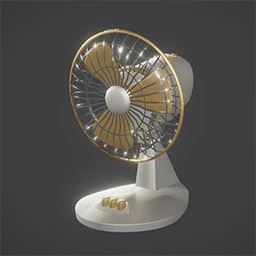
Biggest Fan | Finish the game with developer commentary enabled |
Commentary Text
Induction
"Okay, so that very beginning of Superliminal is actually one of the last parts we finished. Throughout development, we created so many different introductions to the game. Not all of them were cutscenes like that one but we ended up feeling that that 'in-game video sequence' offered a really smooth on-ramp that let us set the framework for what's to come. By keeping it grounded in the world, rather than just a video, we felt it to be a good way to get you situated in the game and aware of what's up."
- Christopher Floyd (Producer & Designer)
- First interactive room of the game, occurring immediately after the beginning cutscene
"So when I wrote the opening line of 'Are you filled with feelings of self-doubt?' at the beginning of the game, I was definitely envisioning a player immediately, unconsciously responding with 'Yes'. And, of course, the purpose of that is to sort of pull you into the idea that you're not playing a character in the game. It's you inside this experience. And, of course, making it clear that the clinic itself is not necessarily the safest or most prestigious place to get treated creates an immediate tension. Especially when the very first thing you do in the game is accidentally sign away all of your rights."
- Will O'Neill (Writer)
- First interactive room of the game, occurring immediately after the beginning cutscene
"A lot of people ask about how the resizing mechanic works. The concepts are actually quite easy. To keep an object looking the same, assume that if we move the object twice as far away, it just needs to be twice as big. It's all proportional. Interestingly enough, this also works no matter what field of view you use.
The hardest part of this mechanic isn't the actual resizing - it's trying to figure out where the object needs to be. To do this, you need [to] test a weirdly-shaped object with a weirdly-shaped background and try to find the right ratio for the object to be big enough to not touch anything while keeping everything accurate and optimized."
- Albert Shih (Game Director)
- Hallway with large, resizable rook piece
"This very first jazz piece in the game is called 'I Wonder' and if it sounds at all familiar to you that is because you just heard its melody and chord progression in the Somnasculpt TV jingle back at the start of the game, which I called 'Smooth Wonder'.
- Matt Christensen (Composer & Sound Designer)
- Room with an assortment of alphabet blocks and chess pieces
A difference with the main resizing mechanic in this game is how much freedom it gives the player. This puzzle is a good example. In most puzzle games, if you put an object on a button in this scenario, the object doesn't need to be moved anymore. The key to unlock the door removes the key from the problem space. But, unfortunately, in our game you could just turn around and grab the object from any distance away. Therefore, we've gotten good at adding barriers in many places so people won't carry an object through all puzzles forever.
- Logan Fieth (Level Designer)
- Room with the first instances of the door that prevents objects being carried through
"When I joined the project, there weren't really any menus except the absolute bare minimum to get the player into the game, and there wasn't any keyboard support either.
So the first order of business was to add proper mouse and keyboard support to the title and pause menus. The hardest part was supporting switching between the two on the fly because you never know when the player's going to do it and it could lock them out of the game.
With the foundation laid, I started working on controller support. In terms of the menus, there wasn't much work to do - the pad basically acts like a keyboard. But gameplay was quite a different story. As we approached launch, we all agreed that controller support wasn't quite up to par, and so we shipped without it, adding it around a month after launch.
To make controllers feel as good as mouse and keyboard, I wrote a bunch of code to modify how controller input is interpreted. For mouse and keyboard, input is more or less one-to-one mapped to player movement. So you move the mouse and the camera turns. But that doesn't feel good with controllers. Trying to pick up a very small object -- say, a chess piece -- could be quite finicky.
In the end, I made it so looking around accelerated the longer the stick is pressed and behaves differently based on whether you are looking vertically or horizontally and also while you're holding an object. Probably the biggest change was an 'auto-lock' feature which draws the focus to a grabbable object as your cursor gets closer to it. All these changes culminated in controllers feeling much more accurate and satisfying."
- Alex Schearer (Gameplay Programmer)
- Room where chess piece must be moved between two slots on opposite walls
"Throughout each level, we try to give subtle hints on which objects are grabbable, and which aren't. This is more of an introductory level so it doesn't have a lot of objects but you might notice that grabbable objects in yellow are complementary colors to the background colors of green and beige."
- Logan Fieth (Level Designer)
- Room where cheese slice is used as a ramp
"There's quite a bit of foreshadowing throughout this level. We wanted to hint at the mechanics that are going to come later in the game. For example, the projection, the clone and the portal hallways later on. Little things like that feel like visual treats when you're playing this level, but serve as fun reminders when you play for a second time, that we kind of told you the whole thing all along."
- Christopher Floyd (Producer & Designer)
- Hallway leading to the room with the boarded up door
"One of our main visual touchstones for this section centers around a couple of silly questions: 'What would someone in the early 90s dream up as a futuristic testing facility? How could they build that on a shoestring budget with infinite time?'. I feel like those two questions were ones we asked ourselves more than once during the process of making this game."
- Steve Allen (Art Director)
- Room with boarded up door
"When we were playtesting, we realized that players were getting tripped up on different aspects of the resize mechanic. So we tried to make each puzzle in this level teach a specific action. The cheese puzzle is our way of forcing players to make something very small to very big and the puzzle after that is the opposite. This broken window puzzle is to teach you how to make things small and fit through a hole, but at a distance, so you can't simply walk up to it."
- Albert Shih (Game Director)
- Room with alphabet block in broken window
"We had this looping hallway for a while but it was very nondescript and players got confused on where they were and they would get turned around. So our artist, Steve, helped mock up some windows and landmarks so people can tell where they are. Immediately, we found that playtesters weren't getting lost anymore and understood the moment."
- Logan Fieth (Level Designer)
- Looping hallway with blue and red display rooms
"Our core game mechanic is so novel that we immediately drew comparisons to other quasi-scifi puzzle games, and since our game is about playing with subverting expectations, we wanted to lean into that and start the first level with a kind of 'test chamber' aesthetic, and immediately break that going forward. Narratively, this space is what Dr Pierce planned to have his dream therapy program look like before it all went wrong."
- Logan Fieth (Level Designer)
- Room where sign is used to press two pressure plates
Optical
"The reason we ended up with this sleep clinic section is because we wanted to convince players that they might have actually woken up from the dream. So we don't have any dream-like mechanics you can play with until you get to the vending machine. Later on, this becomes a hub that you come back to, in order to emphasize the feeling of waking up from a dream within a dream."
- Logan Fieth (Level Designer)
- Hallway of suites
"We want the first moment of people walking into this hallway to feel different from other first-person puzzle games. This hallway is designed to feel surprisingly warm, which helps make it feel a little bit surreal, and a little bit odd. Throughout the game, we're bouncing between these two feelings. The feelings of warmth and coldness."
- Albert Shih (Game Director)
- Beginning of first pink-walled hallway
"So my brief for the jazz part of this soundtrack was always to do my best to emulate the iconic solo jazz piano sound of the great Bill Evans. For that I listened to an album called 'Alone'. My process was to try to compose my own Superliminal jazz standards. I fleshed out the first chorus and melody.
Later on, I workshopped and recorded with my good friend John Reeves, and I am so glad I did because his piano skills are so much better than mine!"
- Matt Christensen (Composer & Sound Designer)
- At fork of first pink-walled hallway
"Optical's pink hotel hallway was the first area we nailed down visually and served as the starting point for how we approached the art for the rest of the game. We wanted enough decoration for it to be interesting to the player, but it couldn't have too much visual noise, or else the player would get lost and overwhelmed. We made interactable objects the complementary color of the surrounding environment which helped them 'pop' more and feel more important. After we were happy with how this part of the game felt, the rest of the locales came together much quicker and we required less iteration."
- Ryan Sanderson (Principal Artist)
- Pink room with two platforms to either side and the exit door imprinted on the wall
"So in this warehouse, you'll notice that there are actually four exits to the room. The level geometry on the other side of the exits would actually overlap if it existed in real space. So, to make the level design a little easier we used our portal tech here. The exits to the room, when you leave the room, are actually in vastly different 'physical' locations within the level but hopefully it should be all seamless for the player.
- Phil Fortier (Graphics Programmer)
- Bridge in warehouse room
"This puzzle has the problem of requiring the room to not have a ceiling which resulted with players wanting to escape the room. In a later update, we added a secret area above this room, and a bunch of other secret areas, based on where we saw players going."
- Logan Fieth (Level Designer)
- Pink room with the grabbable moon in the open skylight
Cubism
"So the Standard Orientation Protocol character is obsessed with proper orientation and that makes her kind of thematically antagonistic to the idea of truth being, you know, intrinsically tied to perspective. But, to me, the fun part of it was writing her as being cruel without there being any actual malice to it. She has nothing against you personally. Her programming simply can't see beyond proper orientation as being the only thing of any value to a Somnasculpt patient whatsoever."
- Will O'Neill (Writer)
- Orange hallway leading to room where a die splits into halves upon being grabbed
"An early challenge we had for creating the art for Cubism was how to approach the space and make sense of it. We started taking it a bit too literally. For example, how could we make sense of the door being so high up? Why would it be built this way? The solution we arrived at was simply not to make sense of it, because we shouldn't.
We created a simple museum aesthetic that wouldn't get in the player's way of experimenting with, and enjoying, the puzzles. Sometimes, keeping it simple is the way to go."
- Ryan Sanderson (Principal Artist)
- Cream-white room with cloud fresco and a die that splits into halves upon being grabbed
"Between the colorful dream spaces, we have these what we call 'back areas'. These back areas serve as the backdrop to everything. They are where the dreamspaces are built, and also the service hallways in between them. We wanted to give them a colder, darker feel, to contrast with the other spaces in the game. But we also wanted to keep a man-made feel, as if people were just here moving things, creating these spaces, doing work a second before you arrived."
"Yeah, it reminded me a little of Charlie Kaufman's Synecdoche, New York. That idea of building a world inside of another world."
- Albert Shih (Game Director) and Christopher Floyd (Producer & Designer)
- Service hallway (with a dream soda machine) leading to a blue-wall-papered room
"Originallly, we had little plaques indicating exhibits within the museum but we felt it was a little bit too on-the-nose, so to speak. You are the main exhibit so I imagine the player's wandering around in-game with an exhibit plaque hanging around their neck."
- Steve Allen (Art Director)
- Orange room with two staircases
"Not all of our interesting perspective moments can be built into puzzles. Some are just great moments that break your expectations. This level interprets a cube in multiple different ways, and even though none of these are difficult puzzles, they all work together to create a whole series of back-to-back surprise moments. It was fun finding the balance of making it feel like someone was messing with you without making it feel like the cube is sentient."
- Logan Fieth (Level Designer)
- Orange room with two dice whose sides disconnect from each other
Blackout
"This level came about because we explored the idea of the game being an anthology of different stories. One story for each level. This level was the 'horror' level and I immediately knew what it would be about: getting the player to be scared of their own shadow. None of the scares are actually real but the player doesn't know that right away. We scrapped the anthology idea but this level worked so well that we kept it."
- Logan Fieth (Level Designer)
- Long hallway whose lights turn off when the player progresses through it
"One aspect we wanted to explore and draw from was the movie scene cuts. Basically, how a match-cut in a movie might make sense in a game. This next moment is a good example. Carefully watch the cloud in the distance. You'll see that it cuts to a new scene."
- Logan Fieth (Level Designer)
- Long hallway with flickering lights
"Boo."
- Albert Shih (Game Director)
- Room with the red acetylene tanks, in front of the jumpscare door
"The object in this puzzle was originally a flashlight but unfortunately, because of how the mechanic works, it always placed the flashlight at the end of the room which is not a particularly useful position for a flashlight. We tried a couple of things but finally decided to switch to an object that could glow from both ends."
- Albert Shih (Game Director)
- At doorway of room with the glowing red exit sign
"When I prototyped this part, there was going to be a shadow of a monster on the wall that turned out to be a bunch of random objects when the lights turned on. The shadow looked silly though, so eventually the reveal became the blood actually being red paint."
- Logan Fieth (Level Designer)
- Long hallway with shelves of boxes to either side
"This room was one of the biggest technical challenges we had in the game. Originally, this was one huge room but turning our dynamic lights all on abruptly killed the frame rate. We ended up chopping the room into smaller areas so we could hide and unhide objects from the player's view once the lights turned back on. This would lessen the amount of objects getting hit by lights at a given time, thus saving on performance."
"Yeah, I remember Phil even tried teleporting the player to a completely new room, but that change-up was a bit too visually obvious, and we eventually realized that chopping up the room was the answer."
- Steve Allen (Art Director) and Ryan Sanderson (Principal Artist)
- Room with IDEA generator
Clone
"We wanted to do a unique alarm clock for each level but this is the only one that survived that idea."
- Logan Fieth (Level Designer)
- Beginning bedroom, above pile of alarm clocks on bedside table
"Part of breaking expectations is changing your definition of an object. A door, which usually keeps people out, becomes a flight of stairs if it is cloned enough times."
- Albert Shih (Game Director)
- Purple hallway, outside green fire exit door
"Yeah, so this 'Right Click To Return' sign, that I bet you didn't even notice, is one of the most unread signs in the game. It comes up later and it's also one of the most unread signs in the game there too."
- Christopher Floyd (Producer & Designer)
- Room with the clonable alarm clock
"Let's talk about the smiley face! Because our goal was to break people's expectations, we prototyped a lot of weird moments like these. Some of them didn't work because they felt too 'meta'. They would actually take people out of the game experience. This one, however, stayed because it was just subtle enough and playful enough that you could see it as a bout of insanity."
- Logan Fieth (Level Designer)
- Purple hallway leading to room with clonable green apple
"Asides from the core resizing mechanic, I think cloning the objects is one of the more immediately enjoyable mechanics that we put into the game. When we ran playtests, this one would always have people smiling."
- Christopher Floyd (Producer & Designer)
- Room with clonable green apple
"Players may notice the motif of the repeating purple hallway found throughout Clone. We wanted the player to have this feeling of, "Have I been here before? This seems pretty familiar.' But we didn't want it to be too easy, or to be 100% unclear, so we introduced differences such as lighting, prop placement and hallway length. That way, for most players, it was something chewing away at the back of their minds, as opposed to being blatantly obvious"
- Ryan Sanderson (Principal Artist)
- Purple hallway
"Lots of credit here to Max Howarth, who plays the role of Dr Glenn Pierce for really nailing this bizarre line in an impressively short number of takes. We were totally prepared to have him record the words in, like, their logical order and rearrange them after the fact but his performance of doing it 'correctly incorrectly' was phenomenal."
- Will O'Neill (Writer)
- End of last purple hallway, next to a Glenn Pierce radio
Dollhouse
"This room kind of happened by accident. We originally just put a cloud video texture as a placeholder as a way to expand on the cloud motif. It ended up working so well, and fitting the tone so well, that we made this a private theater room in the sleep clinic. It evokes a nostalgic and relaxing but slightly creepy feeling, which seemed to fit the game perfectly."
- Logan Fieth (Level Designer)
- Projection room
"The sound effects that probably took the most tweaking, were definitely all associated with the resizable objects. For them, I had to make a collision matrix so that the sound of you dropping a box or a cube would smoothly change from its smallest to its largest size and anywhere in between. So to achieve that there were lots of different layers of the sounds, lots of automated pitch shifting, speeding up, slowing down, lost of cross-fading between different layers of the sound and a lot of trial and error to get it feeling right inside the game."
- Matt Christensen (Composer & Sound Designer)
- Blue-carpeted hallway with a dream soda vending machine
"This puzzle existed for a long time, but it took a while to figure out what the art was going to be, because the bouncy castle used to just be a weird L-shaped block. Eventually, we landed on the pool motif, and the bouncy castle, and added a little bit where you inside the vent."
- Logan Fieth (Level Designer)
- Pool room with bouncy castle
"Because we have portals that you can resize, the player can freely change their own size. This actually created a design problem because you could never predict what size the player was supposed to be. And if we dynamically changed the size of the geometry later on in the level, things could break really easily. So instead, we added these portals, like this doorway over here, which changes size in order to resize you back to the normal scale of a human."
- Logan Fieth (Level Designer)
- Room with grabbable window portal
"Changing the player size through portals has a couple of weird side effects when it comes to programming. You have the obvious ones, such as you need to change the player collider, movement speed, jump height, and mantling distance. You have a couple of less obscure ones, such as needing to change the camera's far-and-near clip planes, so geometry is less likely to clip through your camera as you get smaller. Another interesting one we'll talk about later."
- Albert Shih (Game Director)
- Keyhole room with two grabbable portal doorways
"Another weird thing about the player resizing is that gravity is actually constant across all sizes. So imagine you're in the perspective of an ant and a giant shoe is coming down from the sky to step on you. That shoe, in your mind, might take a couple of seconds but in real life it could be instant. Whatever size you are, large objects travelling through space should feel like they're moving slowly. So when we change the player size, we're actually also adjusting gravity in order to compensate for this as well. This is physically incorrect, but this feels better for the player."
- Albert Shih (Game Director)
- Hallway inside hallway
"So that's my cat. His name is Finn and he's a good boy. We only had a day or two left before finishing the game, and we needed to figure out what kinds of posters to put in our elevators, so I decided to have a little bit of fun with it and this is by far my favorite, of course. The Cardboard Lovers' Association also makes a nice little nod to the cardboard dollhouse."
- Ryan Sanderson (Principal Artist)
- Inside ending elevator
Labyrinth
"The Emergency Exit Protocol is the shortest-lived character in the game but my heart really goes out to him. Because, just like a triangle player in an orchestra, he has precisely one job and he waits patiently for his moment do it. Only, of course, to have it snatched away just as that moment arrives. I think many people can identify with this feeling."
- Will O'Neill
- Hallway immediately following the beginning bedroom
"We had all these surprise moments prototyped, and so I wondered what it could feel like if we had a whole level of surprise moments. I wanted it to be fast-paced - the working title for this level was Chase. This is the 'boss level' of the game, basically. It's inspired by the third act of the movie Brazil - how it gets crazier and faster-paces over time."
- Logan Fieth (Level Designer)
- Horizontal orange museum room following the room with the red pawn piece
"The music throughout the game really goes through a significant transformation but the piano is always there to guide you. Even as the music becomes darker and more electronic it always has the melody or, at least, a really significant role to play. It changes as you progress through the game. I change to different types of piano, starting out with a piano Bill Evans famously recorded on, later switching to a more modern sounding instrument. I double it with prepared piano sounds sometimes, I use felt piano and gradually more reverbs and delays as the game evolves - but at the heart of each piece is the piano.
- Matt Christensen (Composer & Sound Designer)
- Inside elevator with the sign 'EXIT TEMPORARILY MOVED'
"The original idea for labyrinth was to explore earlier areas but with a new spin on them. Sometimes it was a matter of adding new interactive moments to turn things on their head, while for others we would take existing locales and give them a new lick of paint and set dressing. Something familiar, yet fresh and unexpected."
"That instability is perfect for the mood, and for general world-building too. Conceptually, different patients would be bringing different experiences with them into the dream-state, and we wanted to reflect that."
- Ryan Sanderson (Principal Artist) and Steve Allen (Art Director)
- Orange room with a die (instead of the Somnasculpt gallery sign displayed in the previous version of this room)
"When I joined the project, this infinite-elevator sequence wasn't actually infinite. It was just a very large block of, I don't know, 20x10 elevators and the performance, as a result, wasn't very good. The illusion could be ruined if you walked all the way to one side. So one of the things I did was actually make it infinite, so there's a much smaller block of real elevators, and the player gets teleported seamlessly by portals on each end. So the end result is an infinite elevator sequence that you can just go in one direction forever."
- Phil Fortier (Graphics Programmer)
- Infinite elevator section
Whitespace
"So coming up with the way to actually make the 'Portal in a Portal' make sense for the player was a really touch problem, and we iterated on this for weeks, with input from all the different team members. It was really a group effort, but it was important to get it right, because this is one of the pivotal moments in the game. Another thing we had to do was figure out how to make the world degrade in a way that fit with the game... the game's look and feel.
One day, while prototyping, I just happened to accidentally assign a lightmap texture to one of the walls in the room, and I really liked the way it looked. Lightmap textures are textures generated by the engine offline to help with realistic lighting. Anyway, we ended up using this, so when the world degrades, the shaft of light breaking through the walls into the rooms, and that effect is actually driven by a lightmap texture from one of the other levels."
- Phil Fortier (Graphics Programmer)
- At table of model buildings
"This spatiotemporal moment of wonder is brought to you by the very long, but invisible, rectangular portals tucked behind these empty windows, looking out into other parts of the level that you may soon travel to!"
- Phil Fortier (Graphics Programmer)
- Black hallway with line of white windows to either side
"Since the universe that the players inhabit is seemingly created in almost a kit-bashed way while within Somnasculpt, it was a unique challenge to show the players truly a peek behind the curtains of the system. A blank canvas, a scratch document, an empty sticky-note with some notes, little things creatively interspersed throughout. I think I derived some of the inspiration from what happens when you're playing a VR game and suddenly the game crashes to a totally white space. That feeling of disorientation, even though you understand the world around you is an illusion."
- Steve Allen (Art Director)
- Expansive white space with a large, orange safety cone in the distance
"Negative space is another concept related to changing expectations and changing your perceptions of an object. This puzzle works really well because the solution is obvious in retrospect, but it takes people a couple of seconds in order to figure it out. We actually had to add the looping hallway, because without it people would run out of things to do, and immediately start rubbing their bodies against the walls, and come to the solution almost immediately."
- Albert Shih (Game Director)
- Black and white room with blue, red and yellow pillars in each corner
Retrospect
"This last section was something that Logan and I worked together on for a really long time. When I first saw it, I had this great feeling for how it could be, like, a really nice impactful moment. And so I got this really, kinda awe-inspiring inspirational music to put behind it and Logan absolutely hated it. I stuck to my guns, and asked him to stick with it for a while, and play it for a couple of days, couple of weeks and see how things went, and he ended up totally coming around to my side of thinking.
Initially, we were unsure if we went for this kind of 'pure' feeling that it would just be really hokey, and I ended up reading this essay on television, written by David Foster Wallace, and it really kind of encouraged me to get over that sort-of postmodern 'too cool for anything' aesthetic, and to just really go gung-ho into rewarding you for ending the game by giving you something really nice."
"This level was created early on. I liked the idea of giving the player some time to think about their journey, rather than ending the game immediately. I knew the film-like cuts would be perfect for revisiting their experience through the game. Chris initially suggested a song for reference, and at first I hated it. I kept listening to it, though, and eventually grew to love the song. Matt came up with a track that is even better than the reference material, and it fit perfectly."
- Christopher Floyd (Producer & Designer) and Logan Fieth (Level Designer)
- Dialogue starts in White room with chessboard path and ends at cloud projection room
Trivia
- To earn the Biggest Fan achievement, the player can simply play through the last chapter (Retrospect) in Developer's Commentary mode instead of going through the whole game again
- After you finish Retrospect in Developer's Commentary mode, you can view the credits with commentary. After the Special Thanks section, you can hear a unique conversation between Dr. Pierce and the Standard Orientation Protocol.